Thursday, May 27, 2010

Tarifa


Hello! I’m going to talk about the trip of Tarifa because I didn’t go to Jerez.

I liked it so much, it was very funny, but we were on a ship almost all the time.

First, we travelled by coach and we arrived to Tarifa about quarter past eleven and we went to the library and there a man tell us a lot of things about dolphins and whales.

Later, we went to the ship and we were sailing a lot of time. My friend Andrea and I explored the ship: first we went to a room with glass walls, but we couldn’t see anything. Then we were to the middle floor, but we were dizzy there so we went out and we could see the dolphins. A lot of people vomit and stained my friend’s bag, but I had fun at the ship and I took a lot of videos and photos with my camera.

When we left the ship we went to the beach. It was rare because there were two beaches. My friends and I were on the left beach (it was little and colder than the other, but I liked it so much because the water was very clean and the sand was white) and the rest of the class on the other. We had lunch and some people swam in the sea. Then we went to the coach again and we come back. I had a lot of fun and I want to return there again!.


María Delgado Miras 2º ESO C.

Wednesday, May 26, 2010

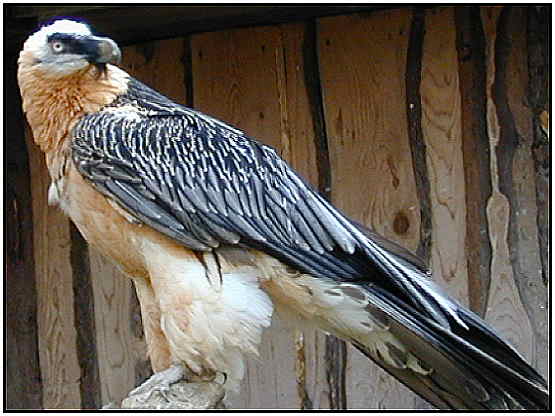
Bearded Vulture


I like this bird because is a big bird and have rare colours.They eat bones because they throw the bones and then they eat the the rest of the bones.


Class: Aves.
Order: Falconiformes.
Family: Accipítridos.
Length: 110-145 cm.
Wingspan: 250-280 cm.
Weight: 5-7 kg.
Posted: 1-2 eggs. Incubation: 53-60 days.
Habitat: High mountain, rocky walls.
Distribution: Southern Europe, North Africa and Central Asia Minor. The Peninsula is present in the Pyrenees.
Sexual maturity: 6 years.
Longevity: 40 years.


CURIOSITIS

It is a sedentary bird while young people make short trips erratic after independence. The drastic reduction of its population in Europe has been primarily due to direct persecution and poison

By Enrique Escalera

Cuban Boa


(Epicrates angulifer)
Features
Class: Reptiles.
Order: snakes.
Family: Boids.
Length: Up to 6 meters.
Distribution: Isla de Cuba.
Habitat: Varied, from forests to scrub.
Food: Carnivorous.
Longevity: 20-30 years.
Description
It can measure up to 6 meters long, one of the largest species of this genus.
Feeding
Carnivora, when hunting, surrounding the dam to suffocate. Their diet is based on birds and rodents, bats also captured in their burrows.
Reproduction
They are ovoviviparous, ie the egg develops inside the female and offspring born as already developed. Born 6-28 pups, about 40 cm in length, after an incubation period of four months. The eggs develop inside covered by a membrane.
Customs and social life
. The boas are endangered animals. Can be found in holes, rocks and fields, although they were originally tree.

By Julio Rodriguez Cuenda

Golden Eagle


Class: Birds.
Order: Falconiformes.
Family: Accipítridos.
Length: 79-86 cm.
I weigh: macho 3-4,5 Kg, female 4-6,5 kg.
Importance: 188-230 cm.
Habitat: Mountain, rocky zones, coppice and fluvial coffees with a dash of milk.
Distribution: Europe, Asia, North America and North of Africa.
Supply: Carnivorous.
Putting: 1-3 eggs.
Incubation: 43-44 days.
Sexual maturity: 4-5 years.
Longevity: 50-60 years


DESCRIPTION

It is the strongest rapaz that furrows our skies. It possesses long and broad wings and the tail with the square end. Dun dark back with the head and nape of golden reflections. Low dun parts, more whites of egg that the back. Tail with bands badly definite, grey dark. Cheek crossed by a chestnut-colored dark band. Chestnut-colored eye, wax and yellow fingers. It has many individual differences due to the sex, age and plumages. The females have a dark brown plumage that tends to the black. With a golden lock and without white spots in the wings and tail. Juvenile darker than the adults with white spots under wings and tail, these spots will be disappearing successively and the plumage will catch on and be definitive at the age of 4

By Eduardo Ojeda

Iberian Wolf


Scientific name : CANIS LUPUS SIGNATUS
Common name : IBERIAN WOLF (lobo ibérico)
Class : MAMMALIA
Family : CANIDAE
Size : THEY MEASURE BETWEEN 1,3 – 2m long
THEY MEASURE BETWEEN 60 – 90 cm to shoulder
THEY WEIGH BETWEEN 32 – 68 kg
Habitat : THEY LIVE IN THE NORTH AMERICA , EURASIA, EUROPE
OCCIDENTAL, WESTERN U.S.A........ETC.
Food : THEY EAT SHEEPS, GOATS, PIGS, DEER, ANTELOPES,
REINDEER, HORSES, MOOSE, BISON......ETC.
Reproduction : SEXUAL
Pregnancy : BETWEEN JANUARY AND APRIL.
Time to pregnancy : 60 TO 63 DAYS.
Pups: 4 TO 6 PUPS.
Longevity: - IN THE WILD: 6 TO 8 YEARS.
- CAPTIVE: CAN LIVE TWICE
Curiosity: THEY ARE SIMILAR THAN THE DOGS AND WHEN THE
MOTHER HAS A PUPPY, AND IT IS 1 OR 2 YEARS OLD, THE PUPPIES
HAVE A NANNY TO CARE FOR THEM.
Carmen Otero Romero 2º C

Gray Wolf


SCIENTIFIC NAME: Canis lupus CLASS:Mammals FAMILY: Canidae MEASURE: 1.3 – 2 metres long from the snout to the tail. 60 to 90 centimetres high WEIGHT: 32 to 68 kg HABITAT: North A merica, Eurasia, Europe, USA, etc. FOOD: Pig, goat, horses, deer, reindeer, antelopes, etc.
REPRODUCTION:Sexual PREGNANCY: Between January and April
TIME TO PREGANCY: 60 – 63 days. 4 – 6 puppies CURIOSITIES: The puppies are receiving life lessons from her "nanny", which is chosen by the alpha female before the birth of their offspring, in order to continue with their care and education after weaning, between four and six weeks life.

Elephant


Loxodonta africana( elephant)

Class: mammals
Family: elephants
Size: 6-7.5 meters (tube included)
Habitat: savannah and forest undergrowth
Food: vegetarian. They grind 100 to 300 kg.
Reproduction: the female may come into heat. Mating is preceded by a confrontation between the males for possession of the female. This heat is approximately 24 to 48 hours.
Gestation: 22 months. The height of the elephant breeding is 90-105 cm.
Longevity: 60-70 years.

By Teresa Romero