Thursday, May 27, 2010

Tarifa


Hello! I’m going to talk about the trip of Tarifa because I didn’t go to Jerez.

I liked it so much, it was very funny, but we were on a ship almost all the time.

First, we travelled by coach and we arrived to Tarifa about quarter past eleven and we went to the library and there a man tell us a lot of things about dolphins and whales.

Later, we went to the ship and we were sailing a lot of time. My friend Andrea and I explored the ship: first we went to a room with glass walls, but we couldn’t see anything. Then we were to the middle floor, but we were dizzy there so we went out and we could see the dolphins. A lot of people vomit and stained my friend’s bag, but I had fun at the ship and I took a lot of videos and photos with my camera.

When we left the ship we went to the beach. It was rare because there were two beaches. My friends and I were on the left beach (it was little and colder than the other, but I liked it so much because the water was very clean and the sand was white) and the rest of the class on the other. We had lunch and some people swam in the sea. Then we went to the coach again and we come back. I had a lot of fun and I want to return there again!.


María Delgado Miras 2º ESO C.

Wednesday, May 26, 2010

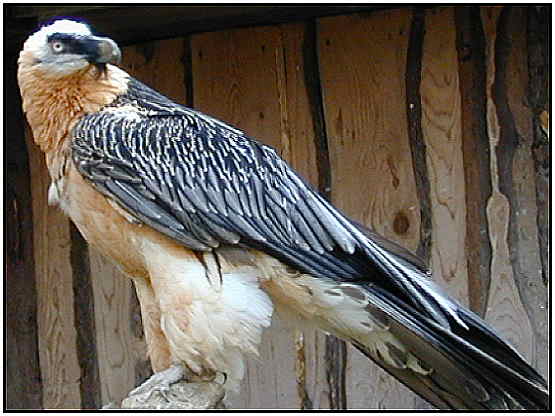
Bearded Vulture


I like this bird because is a big bird and have rare colours.They eat bones because they throw the bones and then they eat the the rest of the bones.


Class: Aves.
Order: Falconiformes.
Family: Accipítridos.
Length: 110-145 cm.
Wingspan: 250-280 cm.
Weight: 5-7 kg.
Posted: 1-2 eggs. Incubation: 53-60 days.
Habitat: High mountain, rocky walls.
Distribution: Southern Europe, North Africa and Central Asia Minor. The Peninsula is present in the Pyrenees.
Sexual maturity: 6 years.
Longevity: 40 years.


CURIOSITIS

It is a sedentary bird while young people make short trips erratic after independence. The drastic reduction of its population in Europe has been primarily due to direct persecution and poison

By Enrique Escalera

Cuban Boa


(Epicrates angulifer)
Features
Class: Reptiles.
Order: snakes.
Family: Boids.
Length: Up to 6 meters.
Distribution: Isla de Cuba.
Habitat: Varied, from forests to scrub.
Food: Carnivorous.
Longevity: 20-30 years.
Description
It can measure up to 6 meters long, one of the largest species of this genus.
Feeding
Carnivora, when hunting, surrounding the dam to suffocate. Their diet is based on birds and rodents, bats also captured in their burrows.
Reproduction
They are ovoviviparous, ie the egg develops inside the female and offspring born as already developed. Born 6-28 pups, about 40 cm in length, after an incubation period of four months. The eggs develop inside covered by a membrane.
Customs and social life
. The boas are endangered animals. Can be found in holes, rocks and fields, although they were originally tree.

By Julio Rodriguez Cuenda

Golden Eagle


Class: Birds.
Order: Falconiformes.
Family: Accipítridos.
Length: 79-86 cm.
I weigh: macho 3-4,5 Kg, female 4-6,5 kg.
Importance: 188-230 cm.
Habitat: Mountain, rocky zones, coppice and fluvial coffees with a dash of milk.
Distribution: Europe, Asia, North America and North of Africa.
Supply: Carnivorous.
Putting: 1-3 eggs.
Incubation: 43-44 days.
Sexual maturity: 4-5 years.
Longevity: 50-60 years


DESCRIPTION

It is the strongest rapaz that furrows our skies. It possesses long and broad wings and the tail with the square end. Dun dark back with the head and nape of golden reflections. Low dun parts, more whites of egg that the back. Tail with bands badly definite, grey dark. Cheek crossed by a chestnut-colored dark band. Chestnut-colored eye, wax and yellow fingers. It has many individual differences due to the sex, age and plumages. The females have a dark brown plumage that tends to the black. With a golden lock and without white spots in the wings and tail. Juvenile darker than the adults with white spots under wings and tail, these spots will be disappearing successively and the plumage will catch on and be definitive at the age of 4

By Eduardo Ojeda

Iberian Wolf


Scientific name : CANIS LUPUS SIGNATUS
Common name : IBERIAN WOLF (lobo ibérico)
Class : MAMMALIA
Family : CANIDAE
Size : THEY MEASURE BETWEEN 1,3 – 2m long
THEY MEASURE BETWEEN 60 – 90 cm to shoulder
THEY WEIGH BETWEEN 32 – 68 kg
Habitat : THEY LIVE IN THE NORTH AMERICA , EURASIA, EUROPE
OCCIDENTAL, WESTERN U.S.A........ETC.
Food : THEY EAT SHEEPS, GOATS, PIGS, DEER, ANTELOPES,
REINDEER, HORSES, MOOSE, BISON......ETC.
Reproduction : SEXUAL
Pregnancy : BETWEEN JANUARY AND APRIL.
Time to pregnancy : 60 TO 63 DAYS.
Pups: 4 TO 6 PUPS.
Longevity: - IN THE WILD: 6 TO 8 YEARS.
- CAPTIVE: CAN LIVE TWICE
Curiosity: THEY ARE SIMILAR THAN THE DOGS AND WHEN THE
MOTHER HAS A PUPPY, AND IT IS 1 OR 2 YEARS OLD, THE PUPPIES
HAVE A NANNY TO CARE FOR THEM.
Carmen Otero Romero 2º C

Gray Wolf


SCIENTIFIC NAME: Canis lupus CLASS:Mammals FAMILY: Canidae MEASURE: 1.3 – 2 metres long from the snout to the tail. 60 to 90 centimetres high WEIGHT: 32 to 68 kg HABITAT: North A merica, Eurasia, Europe, USA, etc. FOOD: Pig, goat, horses, deer, reindeer, antelopes, etc.
REPRODUCTION:Sexual PREGNANCY: Between January and April
TIME TO PREGANCY: 60 – 63 days. 4 – 6 puppies CURIOSITIES: The puppies are receiving life lessons from her "nanny", which is chosen by the alpha female before the birth of their offspring, in order to continue with their care and education after weaning, between four and six weeks life.

Elephant


Loxodonta africana( elephant)

Class: mammals
Family: elephants
Size: 6-7.5 meters (tube included)
Habitat: savannah and forest undergrowth
Food: vegetarian. They grind 100 to 300 kg.
Reproduction: the female may come into heat. Mating is preceded by a confrontation between the males for possession of the female. This heat is approximately 24 to 48 hours.
Gestation: 22 months. The height of the elephant breeding is 90-105 cm.
Longevity: 60-70 years.

By Teresa Romero

Cuban Boe


-Scientific name: Epicrates angulifer.
-Common name: Cuban Boe.
-Class: Reptiles.
-Family: Boids.
-Size: Up to six meters.
-Habitat: Varied, from forest to shrubland.
-Food: Carnivorous; Their diet is based on birds and rodents.
-Longevity: 20-30 years.
-Reproduction: They are ovoviviparous. Born 6 to 28 pups, about 40 cm long, after an incubation period of 4 months old.
-Customs and social life: Boas are endangered animals. Can be found in holes, rocks and fields, although they were originally tree.

by Marina Blanco

The Red Panda


The red panda is dwarfed by the black-and-white giant that shares its name. These pandas typically grow to the size of a house cat, though their big, bushy tails add an additional 18 inches (46 centimeters). The pandas use their ringed tails as wraparound blankets in the chilly mountain heights.
The red panda shares the giant panda's rainy, high-altitude forest habitat, but has a wider range. Red pandas live in the mountains of Nepal and northern Myanmar (Burma), as well as in central China.
These animals spend most of their lives in trees and even sleep aloft. When foraging, they are most active at night as well as in the gloaming hours of dusk and dawn.
Red pandas have a taste for bamboo but, unlike their larger relatives, they eat many other foods as well—fruit, acorns, roots, and eggs. Like giant pandas, they have an extended wrist bone that functions almost like a thumb and greatly aids their grip.
They are shy and solitary except when mating. Females give birth in the spring and summer, typically to one to four young. Young red pandas remain in their nests for about 90 days, during which time their mother cares for them. (Males take little or no interest in their offspring.)
The red panda has given scientists taxonomic fits. It has been classified as a relative of the giant panda, and also of the raccoon, with which it shares a ringed tail. Currently, red pandas are considered members of their own unique family—the Ailuridae.
Red pandas are endangered, victims of deforestation. Their natural space is shrinking as more and more forests are destroyed by logging and the spread of agriculture.


María Teresa Silva Martín

Vicuña


COMMON NAME: Vicuña
SIENTIFIC NAME: Vicugna vicugna


CLASS: Mammals
FAMILY: Camelidae
HABITAT: Plateau between 3.700 and 4.700 m
FOOD: Herbivore. They prefer short grasses and herbs and some succulents and rarely eat coarse grasses, although lichens.

REPRODUCTION: Gestation: 11 months.
Number of offspring: 1 calf.
Calf birth weight: 4.6k
Breastfeeding: 3-6 months.
Sexual maturity: 2 years.
Heat season: after labor


HEIGHT: 75-95 cm.
WEIGHT: 45-55 Kg
LENGTH: 155-165 cm
TAIL LENGTH: 15-20 cm
LONGEVITY: 15-20 years


EXPERIENCE AND OPINION

This animal similar to a llama attracted my attention because it is a camelidae and it hasn’t got hump. I think there were only two vicuñas in the zoo. As well, vicuñas produce small amounts of extremely fine wool, which is very expensive because the animal can only be shorn every 3 years. It’s also the only ungulate that has lower incisors as rodents.
I think vicuñas should be more popular.

By ALEJANDRO ROMÁN LÓPEZ

Giraffe


(Giraffa camelopardalis rosthschildi)
Features
Class: Mammals.
Order: Artiodactyla.
Family: Giraffe.
Length: 360-400 cm.
Tail Length: 90-110 cm.
Overall height: 500-610 cm.
Height at shoulder: 270-330 cm.
Weight: 950-1300 kg
Distribution: Africa, especially Uganda.
Habitat: Savanna and open land, usually associated with acacias. They are concentrated near the rivers in dry season.
Food: Vegetarian.
Gestation: 15 months.
Litter: 1cría.
Breastfeeding: 12-14 months.
Maturity: Two years.
Longevity: Up to 28 years (in captivity).
Food: Exclusively vegetarian, feeding browsing leaves, fruit trees such as acacias and mimosas.


Description
Distinguished by its long neck, forelegs longer than hind, pointed ears. Has mane from the neck to the cross. Cola topped by a plume of dark color. The frontal horns are short, covered with skin and hair. They have a central horn, sometimes it's just a bump. Sometimes two very small bumps, looking like horns on the occiput.
Food
Exclusively vegetarian, feeding browsing leaves, fruit trees such as acacias and mimosas. Your neck lets you browse to a height of 6 m. He spends most of the day and into the night eating, especially at dawn and dusk. To drink extends its front legs and kneels on the elbows.
Reproduction
Females are sexually mature at 3 ½ years and one later males and reproduce up to 20. You can play at any time of year. The gestation period lasts 457 days. Usually the female gives birth to one offspring but it is not unusual to give the twins. Breeding can be kept standing at 20 minutes after birth and when breast, measuring 2 meters in height and weighs 30-40 kg. Continue to nurse until 13 months and remain with their mother from 2 to 3 months.
Customs and social life
Are active at dusk and early morning the day resting. They have developed senses of sight and hearing, but has a poor sense of smell. The larger size increases your range of vision. They defend the run or standing in groups protecting their young. They can hit with your head or neck. They are usually solitary or grouped in small groups or as a day care groups, some adults are caring for their young while others will eat or drink. The old males are usually solitary, although groups often do not have much cohesion. They tend to be loyal to the same territory. Gallop at a good speed, 56 km / hour, ahead of the rear legs on the front what is called single-foot step.

By Barbara

My Trip to Jerez

First we went to Tio Pepe’s cellar. There we visit the cellar and the guide was teaching us somethings about the cellar. We saw the barrels of wine and we rode by train too, it’s was very fun!
And later, we went to the Zoo. We saw a lot of animals there. And animals very rare! There was elephants, lyons, bats…
But my favourite animal was the CASSOWARY. The cassowary is like a ostrich but more beautiful!

Javier Gómez Fernández 2º ESO C

Thursday, May 20, 2010

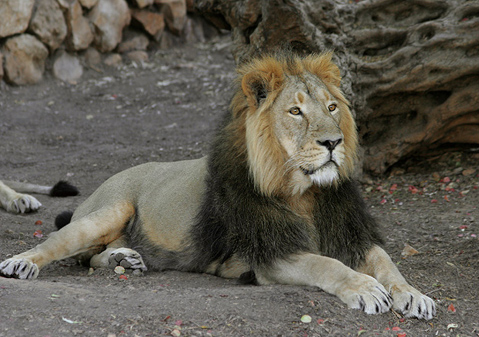
THE ASIATIC LION


COMMON NAME: Asiatic lion.

SCIENTIFIC NAME: Pantera leo persica.

CLASS: Mammals.

ORDER: Carnivores.

FAMILY: Felidae.

DISTRIBUTION: Asia in the Gir forest, India.

HABITAT: Semi until moist savanna.

FOOD: Carnivore

LENGTH: 1.10–1.40 meters.

HEIGTH: 85- 90 cm.

WEIGTH: 160-190 kg males and females 110-120 kg.

PREGNANCY: 14-15 weeks

LITTER: 1-6 offspring.


COMMENT


I didn’t go to Jerez de la Frontera’s zoo, but some of my classmates told me their experience and I think that the trip was cool. If I had gone maybe my favourite animal had been the Asiatic lion. I think that the lion is a very interesting animal; I don’t know why but since I was little the lion attracted my attention.


BY: Miriam García Gutiérrez Class: 2º E.S.O. C

THE LAMMERGEIER

ELENA SUTIL-GAÓN RUIZ. 2º C

- The scientific name is: Gypaetus barbatus

- The common name is: Lammergeier

- What family is the Lammergeier? : accipitridae

- Class: birds (oviparous)

- Size: -length: 105 and 125 cm.

-weight: 5,5 to 5,9 kg.

-wingspan: 235 to 275 cm.

- Habitat: In Eastern Europe Pyrenees and Sierra de Cazorla (Jaén)

- They eat: The last thing left of the carcass, including skin and bones that break throwing them from high above a stone and break them, eat them or Caracu marrow, and can digest better.

- Reproduction: mating period begins in October-November and lasts until December. They lay one to two eggs, mainly the female incubates for 54 or 58 days. Survive only a chicken, which will remain in the nest about 120 days before its first flight.

- Curiosities: This species has disappeared from much of Europe in recent times. The bearded vulture is part of the coat of arms of Transylvania, though a long time ago but became extinct in this region.

- Longevity: in captivity live about 23 years.

Wednesday, May 12, 2010


Shelduck

Class:
Aves.

Order: Anseriformes.
Family: Waterfowl.
Length: 62 cm.
Weight: Males 1200-1600 gr., Female 1100 gr.
Habitat: marshes and lakes.
Distribution: Europe, Asia and Africa.
Food: Vegetarian and some insects.
Posted: 8 to 12 eggs.
Incubation
:
27-29 days.


Costumes and social life

Prefers lakes with a depth of less than 1 meter, fresh, brackish or salt, both permanent and seasonal and located up to 100 meters.Often form flocks of varying size.

Condition

The global situation is not threatened, but Europe's population at risk, since only played in Greece.In the Iberian Peninsula can be seen wandering some individuals.

by Manuel Alvarez Marquez

Wednesday, May 5, 2010

Ocelot (Leopardus pardalis)


Class: Mammals.
Order: Carnivores.
Family: Felidae.
Height: 40-50 cm.
Weight: 11-16 kg
Distribution: From South America to northern Argentina.
Habitat: Tropical forests, swamps, thickets and plains.
Food: Carnivorous.
Litter: 2-4 offspring. .
Longevity: 13-17 years


--The ocelot has a beutiful coat, this is like the leopard coat. For this he was persecuted to do luxery things.

--I thing than it needs a big place because he wasn´t comfortable in the cage.

--I like this animal because i see it like a little leopard that i can have like a pet.

--it hunts at night and it sleeps at the morning on the trees; so when we see it was sleeping but it got up awhile.


helloooooooooooooooooooooooooooo